LOWER BACK Pain Physio Sydney
Don’t let lower back pain dictate the limits of your workout
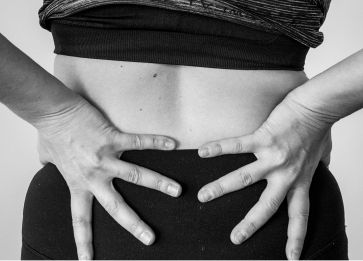
How you move shapes how you live, work, train, and recover. When lower back pain or stiffness dictates your depth mid-deadlift or leaves you locked up after the commute into the city, it compromises more than your training momentum—it alters your day.
We provide tailored, evidence-informed physiotherapy and chiropractic care designed to trace the root of your spinal load, helping you get back to your training, your work, and your active routine with absolute movement confidence.
Your Training Shouldn’t Demand A Compromise
When lower back discomfort acts up mid-deadlift, or leaves you feeling rigid after a long drive to the office, it does more than just hurt—it disrupts your momentum. You want to focus on your fitness and daily performance, but instead, you find yourself modifying your routine, dropping the weight on the bar, or skipping active weekends altogether..
Many capable individuals try to push through the tightness or wait it out, hoping it will simply clear up on its own. However, without addressing how your body manages physical loads, the same familiar restriction returns the moment you increase your training volume.
You should not have to guess how to read your injury, nor should you spend your energy training around it.
What We Manage In The Clinic
Load Deficits with Lifting
Tension that breaks your form during mechanical loading. We analyze your movement patterns to find the exact threshold where your structural positioning breaks down, giving you a clear plan to restore your lifting mechanics..
Impact Sensitivity with Running
Discomfort triggered by repetitive force production or capacity limits. We assess your joint mobility and trunk control to plainly understand how you absorb impact, ensuring you can sustain mileage without structural pushback.
Post-Partum Structural Loading
Navigating the physical aftermath of carrying and delivering life over nine months. Your anatomy has shifted; we design an objective, gradual reloading strategy to help you return to your training volume safely.
Neural Overload & Sciatica
Radicular tension, whether it sits tightly in the hip or traces all the way to the foot. We map the thread back to the mechanical root cause, unload the irritated neural tissue, and provide a tailored plan to rebuild your capacity.
Thoracic & Mid-Back Stiffness
Axial strain originating from prolonged desk work or high-velocity athletic rotation. We assess your thoracic rotation and rib cage mechanics to trace the driver of the restriction, clearing the path to daily movement comfort.
The Contrast in Outcomes
THE DEFAULT APPROACH

- Sustaining ongoing irritation, risking an increase in your recovery timeline, and guessing if your next workout will cause a flare-up.
- Paying for repetitive, isolated appointments that focus only on short-term relief.
- Modifying every lift, dropping weight unnecessarily, and losing your training momentum.

THE PRO-FORM STANDARD
- A structured model built around the result, designed to keep you at the top of your training.
- Moving with predictable confidence, meeting your physical demands, and building strength that lasts.
- Training at 100% capacity, knowing your lower back can safely manage the load.
A New Era of Care
At Pro-Form Physiotherapy, we work from a simple conviction: movement matters. Over the past decade, we have quietly built a reputation across Sydney as the clinic the Hills trains at—serving business owners, ambitious professionals, and competitive athletes who have no time to lose.
Most traditional clinics operate on time-on-the-table—billing you by the appointment block.
We design our care around the specific physical result you came for.
We take an objective, human approach to physical assessment.
Rather than treating surface symptoms, we trace the thread of your movement patterns, load management, and training history to build a structured, individual management plan.
Same-week appointments available across all seven clinics. Call (02) 8320 6186 or book online.
The Work: Your Path To Capable Movement
-
During your initial appointment, we evaluate your spinal mobility, trunk stability, and lifting mechanics under load to plainly identify the underlying factors contributing to your discomfort.
-
You will receive a clear plan combining precise manual techniques with targeted strength and conditioning tailored to your lifestyle. If a plan doesn't fit your specific week or travel schedule, we rebuild it until it does.
-
Execute your program with expert guidance on how to safely scale your workouts, gradually building your training tolerance so you can get back to full activity with absolute peace of mind.
Refined care. Bold conviction.

We believe in plainspoken communication so you understand exactly what your recovery requires.
No generic, one-size-fits-all sheets of exercises.
Every movement is selected for a reason.
No hidden expectations.
Just practical clinical strategies focused on long-term movement outcomes. If your recovery demands an answer outside our walls, we tap our networks until we find it.
Ready to train without second guessing?
Don't let lingering lower back pain dictate your performance or keep you sidelined from your routine. Book an assessment with our team today and receive a clear roadmap for your physical recovery.
Your Back-Related Questions, Answered
-
Lower back muscle strains plainly present as a regional ache and localized stiffness that improves with gentle movement. In contrast, a lumbar disc injury with nerve compression alters the signal entirely, producing sciatica—sharp, shooting, or electrical sensations that trace down the leg past the knee, occasionally paired with numbness or weakness.
-
The objective goal overnight is maintaining a neutral spinal alignment to unload the joints. For side sleepers, placing a firm pillow between your knees limits pelvic twisting. For back sleepers, a pillow beneath your knees unloads extension forces on your lower lumbar spine, easing muscle spasms while you rest.
-
Severe mechanical warning signs require immediate emergency care. These include symptoms of Cauda Equina Syndrome: sudden numbness or altered sensation in your groin and saddle region, progressive muscle weakness in your legs (such as your foot catching or dropping), or acute changes in bowel or bladder control.
-
Clinical evidence universally advises against prolonged bed rest past 24 to 48 hours. Early, controlled exposure to low-impact activity like walking preserves your movement capacity, prevents severe structural stiffness, and accelerates your return to training.
-
Forceful, habitual self-cracking creates temporary hypermobility in the spine. This frequently prompts the surrounding muscles to tighten up even harder to protect the loose joint. Targeted manual therapy and precise movement strategies prescribed in the clinic provide a controlled release without creating structural instability.